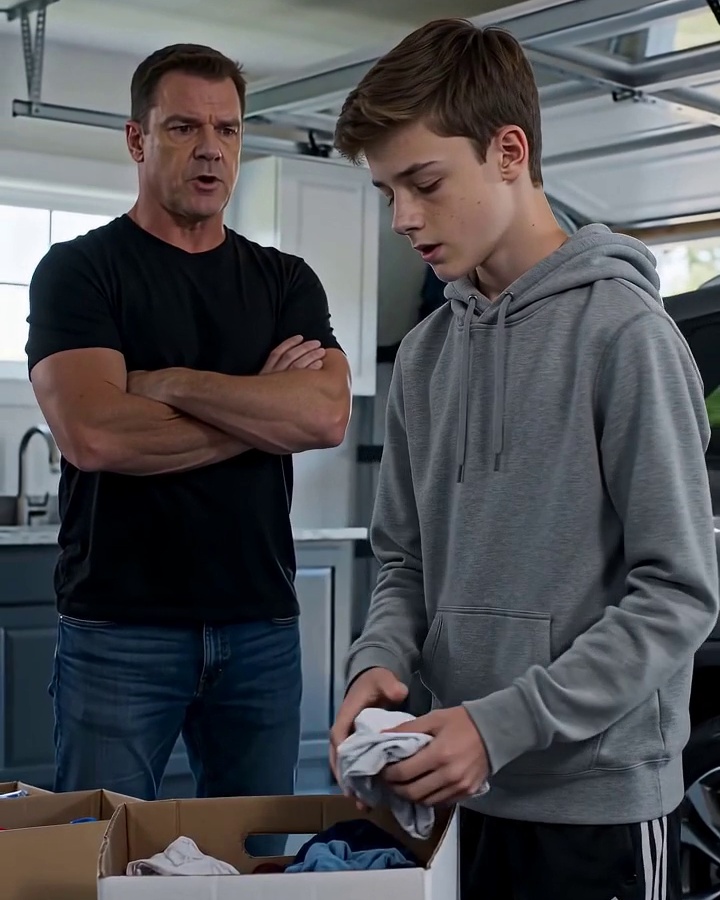
Ethan Was Accused of Taking Clothes Without Permission — Then the Garage Camera Showed Who Had Put Them There Before He Ever Touched the Box
Chapter 15 — Ask What Happened Before Deciding What It Means
Claire placed the label above the garage workbench.
It read:
ASK FIRST. ASSUME LATER — OR PREFERABLY NEVER.
Ethan laughed.
Daniel stared at it.
“I’m being bullied in my own garage.”
Claire smiled.
“Educationally supported.”
The label stayed.
Not because the family needed a dramatic rule for every disagreement.
Because the original argument had shown how quickly a completely ordinary situation could become something larger when one person decided what the evidence meant before hearing the explanation.
Daniel had walked into the garage and seen Ethan packing clothes.
That part was true.
Daniel recognized his own coat.
Also true.
The box appeared ready to leave.
True again.
But from those facts, Daniel built a conclusion:
Ethan had taken family belongings without permission.
That part was false.
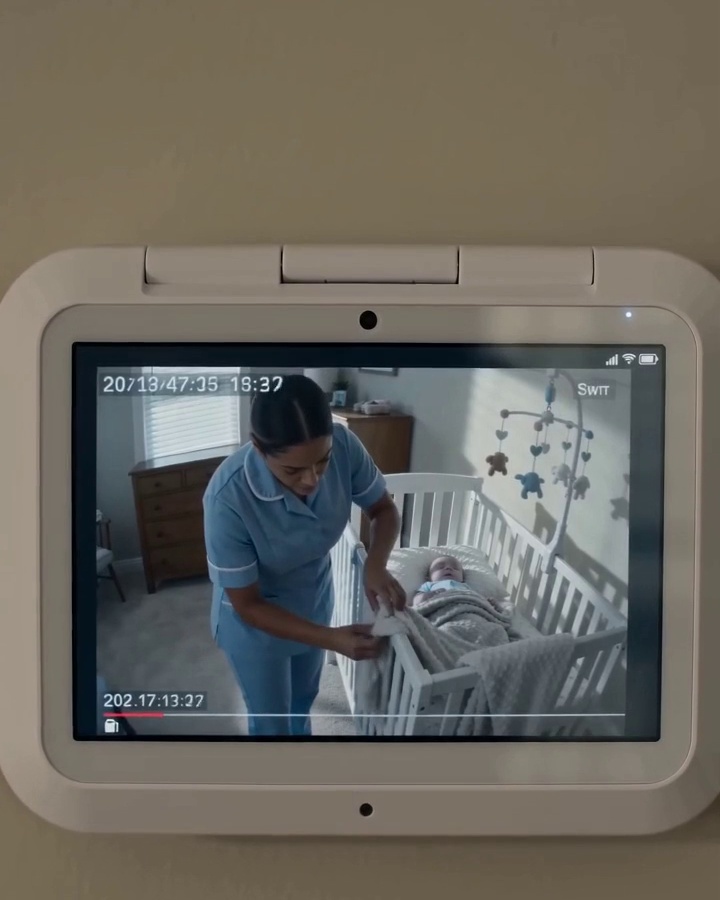
The security footage showed Claire bringing the clothing into the garage two days earlier.
She had been sorting the hall closet.
She placed the items there temporarily.
She even left a note telling everyone not to discard anything until ownership was confirmed.
Ethan later saw the pile.
His school was running a winter clothing drive.
So he began sorting.
His own items could be donated immediately.
Everyone else’s went onto a checklist.
Daniel’s coat was marked:
ASK.
Claire’s sweater was marked:
ASK.
Unknown clothes were marked:
CHECK OWNER.
Ethan had even recognized shirts belonging to Uncle Jason and separated them so they would not accidentally be donated.
The moment Daniel entered, Ethan was holding Daniel’s coat because he was checking it against the list.
That frozen moment looked suspicious.
But only if nobody asked what happened before it.
Claire did.
She pointed toward the security camera.
“Then check it.”
The footage changed everything.
Not because cameras were more trustworthy than Ethan.
Because Daniel had stopped listening to Ethan before the camera was opened.
The recording forced him to return to the part of the story he had skipped.
Who brought the clothes into the garage?
Claire.
When?
Two days earlier.
Why?
Closet sorting.
What had Ethan actually done?
Separated potential donations while preparing to ask the owners.
What had Daniel assumed?
That his son was secretly taking belongings.
Those were not the same story.
Daniel apologized.
But the family did not treat the apology like a reset button.
Ethan remained upset for a while.
Daniel gave him room.
Then proved the apology through smaller moments.
When Ethan brought clothes back from school, Daniel asked why instead of accusing him of taking them.
When Daniel’s drill disappeared, he asked whether Ethan had seen it instead of demanding to know where Ethan put it.
The drill was with Uncle Jason.
When another person’s sealed letter appeared inside a donated coat, Daniel returned it unopened.
And when Daniel wanted his office to join Ethan’s clothing drive, he asked before inserting himself into the project.
Ethan noticed every one of those moments.
Trust did not return because Daniel said:
“I’m sorry.”
It returned because his next reactions sounded different.
The winter drive eventually ended.
Ethan’s school collected hundreds of pieces of clothing.
Daniel’s workplace continued its own smaller collection the following year.
And Daniel’s old blue coat never returned to the garage.
Someone else needed it.
That was enough.
The empty cardboard box, however, remained for months.
Ethan eventually used it to store old sports equipment.
One Saturday, Daniel saw him placing several things inside.
A basketball.
Two pairs of shoes.
A folded team jacket.
Daniel walked into the garage.
Ethan looked up.
For a second, both remembered the earlier argument.
Daniel smiled.
“What are you doing with all of this?”
Ethan narrowed his eyes jokingly.
“Careful.”
Daniel laughed.
Then corrected himself.
“Let me try that again.”
“What’s the plan?”
Ethan smiled.
“Storing old soccer stuff.”
“Need help?”
“Yeah.”
Daniel picked up the other side of the box.
That was how ordinary the lesson eventually became.
No speeches.
No security footage required.
Just one extra question before judgment.
Years later, Ethan barely remembered which shirts had been inside that first box.
He could not remember exactly how many coats they donated.
But he remembered his father’s face when the security video played.
The anger disappearing.
The second look at the footage.
Then Daniel realizing that the clothes had been in the garage before Ethan ever touched them.
Ethan remembered something else too.
Daniel did not respond by pretending his accusation had been reasonable after all.
He did not say:
“Well, you can see why I thought that.”
He did not turn the old headphone incident into justification.
He admitted what happened.
“I decided what you were doing before I let you explain.”
That mattered.
Because Daniel’s mistake had not been noticing a suspicious-looking situation.
Any parent might have questions after seeing a teenager packing family belongings into a box.
His mistake was treating the first possible explanation as the only explanation.
And treating Ethan’s denial as something that needed proof before it deserved attention.
The garage camera exposed the missing part of the story.
Claire had placed the belongings there.
Ethan was sorting them.
The family still owned the choices.
And not one item had left the house without permission.
Eventually Claire replaced the handwritten garage label because the corners curled.
The new one was shorter.
ASK WHAT HAPPENED.
Daniel liked it better.
So did Ethan.
Because that had been the entire lesson from the beginning.
A box can look suspicious.
A person can be standing beside it.
A coat can be in their hands.
And every one of those details can be completely true…
while the story you build from them is completely wrong.
Sometimes the missing part is visible on a camera.
Sometimes it is in a note.
Sometimes it is simply waiting inside the sentence you interrupted.
Daniel learned to ask for that part first.
And Ethan learned that when he told his father the truth afterward, he no longer needed a security recording beside him for his words to be taken seriously.
THE END
“`