Oliver Was Forced to Serve Dinner While Everyone Else Sat Down — Then His Father Found the Place Card Proving His Seat Had Been Removed on Purpose
Chapter 10 — The Chair Stayed at the Table
Preston Vale did eventually make a donation to the Riverside Reading Project.
But not that night.
He waited.
First, he asked to meet the program director.
Then teachers.
Then several families who used the literacy program.
He wanted to understand how decisions were made.
Who was listened to.
And whether the organization treated children as participants rather than decorations for donor presentations.
Three weeks later, Preston contributed thirty thousand dollars.
Less than Victoria hoped.
But with one condition:
A portion of the funding had to support a student advisory group.
Older children participating in Riverside programs would meet several times a year and give feedback.
Victoria initially found the idea unnecessary.
Then remembered Oliver’s chair.
“Approve it,” she said.
The board did.
Victoria also stepped back from controlling donor dinners alone.
Future events required a second coordinator to approve seating changes involving student guests.
Not because chairs were complicated.
Because priorities could become complicated very quickly when money entered the room.
Mia and Ethan’s catering team received an apology too.
Victoria had overridden their professional recommendation simply because she wanted the table to photograph perfectly.
“You told me another chair would work,” she told Ethan.
“I didn’t listen.”
Ethan nodded.
“Correct.”
Victoria almost smiled.
“You don’t soften anything, do you?”
“Occupational hazard.”
At home, James talked with Oliver several days later.
“Do you want to keep going to Riverside events?”
Oliver shrugged.
“Maybe.”
“You don’t have to.”
“I like the books.”
“Good reason.”
Oliver thought.
Then:
“Can I still do speeches?”
James smiled.
“If you want.”
“But I don’t want to serve bread.”
James laughed.
“Completely reasonable.”
Several months later, Riverside held a smaller luncheon at Oliver’s school.
Students sat with teachers, volunteers, and donors.
Oliver entered the library.
Then stopped.
A place card sat in front of one chair.
OLIVER BENNETT
He looked toward Victoria.
She was standing near the door.
“That’s yours,” she said.
Oliver looked underneath the table.
Victoria frowned.
“What are you doing?”
“Checking if the chair disappears.”
James nearly choked trying not to laugh.
Victoria closed her eyes.
“I deserved that.”
Oliver smiled.
Then sat down.
This time there was room for everyone.
Not because the room was larger.
Not because the table had changed.
Because the adults organizing it had changed what they considered important.
That lesson stayed with James.
The original dinner had looked sophisticated from the outside.
Perfect flowers.
Expensive plates.
Important guests.
A charity cause everyone claimed to care about.
But one child stood beside the table carrying bread while his assigned chair sat against the wall.
Nobody spoke at first.
That bothered James almost as much as Victoria’s decision.
People had noticed.
They simply did not want to make the dinner uncomfortable.
So Oliver carried the discomfort instead.
James later told several relatives:
“If something looks humiliating to a child, you don’t need to wait for the parent to arrive before asking a question.”
That mattered.
Oliver’s place card had been on the floor.
The chair had been removed.
The contradiction was visible.
Someone could have asked:
“Wasn’t Oliver supposed to sit here?”
No one did.
Until James arrived.
The memory stayed with Oliver too.
Not only the embarrassing part.
He remembered his father walking into the room.
Looking at him.
Noticing immediately that something was wrong.
“Why aren’t you sitting down?”
Oliver pointing toward Victoria.
“She gave me this.”
Then James seeing the place card on the floor.
Picking it up.
OLIVER BENNETT.
His chair had always existed.
His place had always been assigned.
The problem was that somebody decided his place was the easiest one to take away.
James pulled the chair back.
Took the basket from Oliver.
Then placed a cupcake in front of him.
That small cupcake became strangely important in Oliver’s memory.
He once asked James:
“Why did you give me dessert before dinner?”
James smiled.
“Because rules had already collapsed.”
Oliver laughed.
Then James became serious.
“And because I wanted you to understand immediately that you weren’t in trouble.”
Oliver nodded.
That was exactly what he had needed.
Victoria had made him feel as though losing his seat was something he should quietly accept.
James wanted to reverse that message immediately.
You were invited.
You belong here.
Eat.
Years later, Victoria still kept one object from that dinner.
Oliver’s original place card.
James discovered it in her office.
It sat inside a small frame.
Beneath it was a handwritten sentence:
DON’T REMOVE THE PERSON TO PROTECT THE PLAN.
James stared at it.
“You kept this?”
Victoria nodded.
“I needed the reminder.”
She had spent years believing successful events meant preventing inconvenience.
Keep donors happy.
Keep timing precise.
Keep tables attractive.
Keep problems invisible.
The dinner taught her something else.
Sometimes making a problem invisible only means handing it to someone with less power to object.
That night, the person had been Oliver.
He was family.
He was young.
He was unlikely to challenge her.
So his chair became expendable.
Victoria eventually understood why that made the decision worse, not easier.
At a later fundraiser, a coordinator rushed toward her.
“We have one extra guest and the table is full.”
Victoria looked toward the room.
Then asked:
“Can we add a chair?”
“It might look uneven.”
Victoria smiled faintly.
“Then let it look uneven.”
A chair was added.
No one was removed.
No child was handed a basket.
No guest even noticed the table was asymmetrical.
And that was perhaps the most embarrassing discovery of all.
The problem Victoria had humiliated Oliver to solve…
had barely been a problem in the first place.
A chair.
Two minutes.
A slightly imperfect photograph.
That was all.
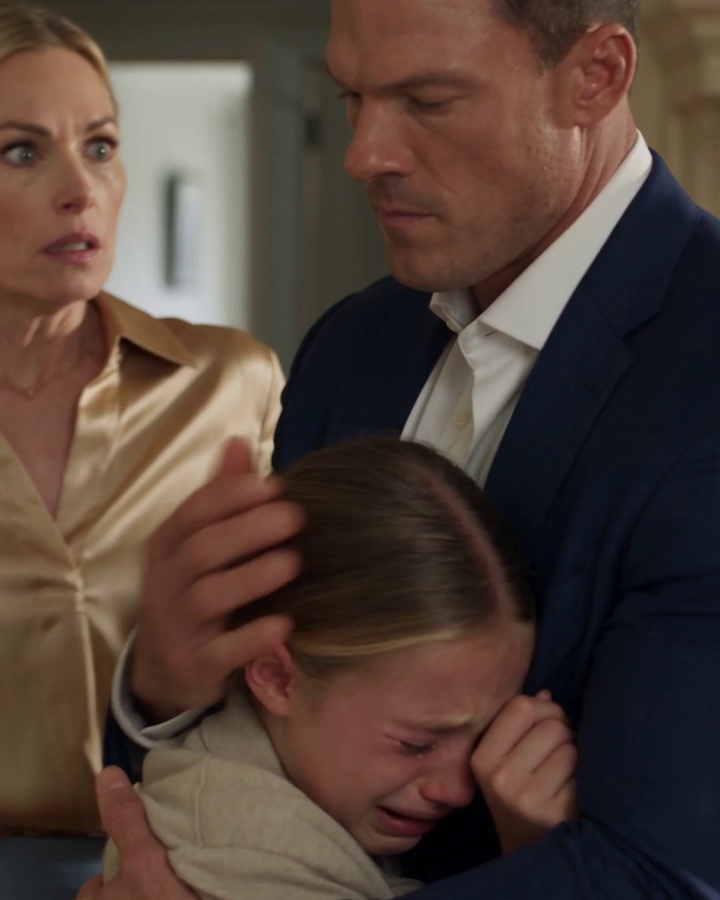
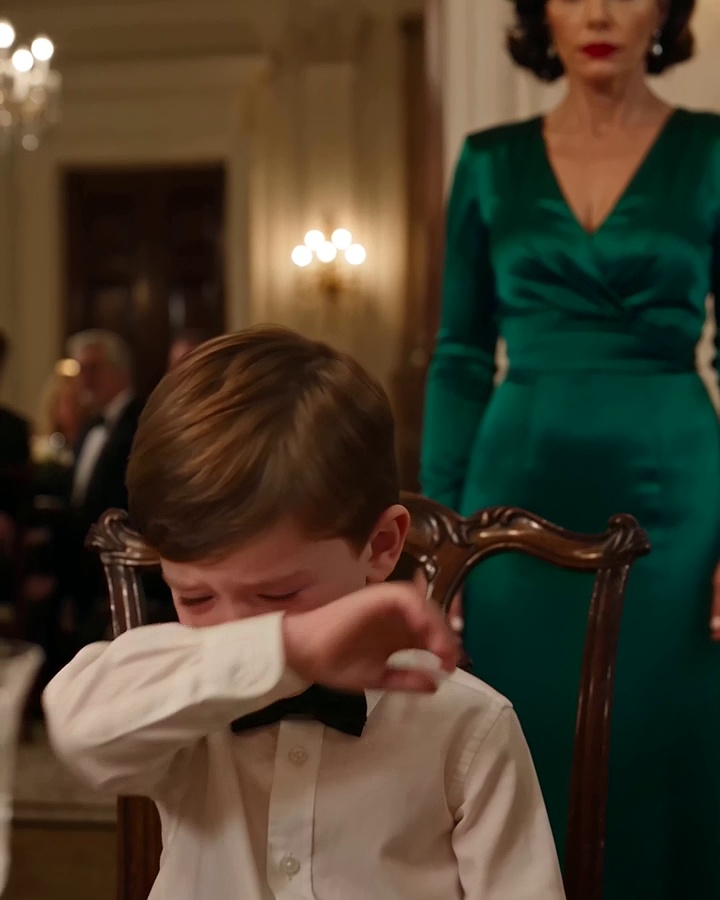
Yet because she had decided appearances and donor approval mattered more in that moment, a little boy ended up standing beside his own assigned seat with tears in his eyes.
From then on, Victoria remembered what Oliver’s speech said:
“Kids read more when somebody makes room for them.”
She began applying that sentence far beyond books.
Make room at the table.
Make room in the schedule.
Make room for an unexpected guest without removing someone else.
And most importantly…
make room for a child to be treated like the invited person he already was.
THE END
“`