Emily Opened an Old Storage Box Filled With Family Files — Then Grandpa Arthur Recognized Victoria’s Signature on the Document She Never Wanted Them to See
Chapter 16 — No More Hidden Box
Arthur looked at the storage box for a long time.
Then said:
“We don’t hide it again.”
Emily nodded.
Together, they moved everything from the storage room to the dining table.
Not to display Victoria’s mistake like a family trophy.
Not to shame her for the rest of her life.
To put the record where it belonged.
With the people whose lives it described.
Arthur separated the documents into groups.
Samuel’s letters.
Rebecca’s cards.
Thomas’s invitations.
Claire’s correspondence.
Telephone logs.
Victoria’s handling lists.
The signed instructions.
The record showing she had signed for Samuel’s final registered letter.
Samuel kept copies of his own correspondence.
Arthur kept the originals.
Rebecca received her old birthday cards back temporarily so she could show her children.
Then she returned them to Arthur.
“They’re yours,” she said.
Arthur smiled sadly.
“They always were.”
Within a month, Arthur met Samuel in person three more times.
The first conversations were awkward.
There was no cinematic moment where nine years vanished over one cup of coffee.
They had changed.
Both had built routines without the other.
Both carried old anger.
And both had said harsh things during the original family conflict before Victoria began filtering communication.
But now they were finally arguing about things they had actually said.
Not messages invented or withheld by someone else.
Samuel came for Sunday lunch.
Arthur visited his house the following week.
Thomas invited both brothers to dinner.
His soup was still terrible.
Arthur told him so.
Thomas answered:
“Nine years away and you’re still rude.”
Arthur laughed harder than Emily had heard him laugh in months.
Rebecca brought Noah and Grace to meet him.
Arthur was nervous.
“What do I say to children who should’ve known me years ago?”
Emily answered:
“Start with hello.”
So he did.
Noah asked whether Arthur really had an old train set in the attic.
Grace wanted to know why everyone called him Grandpa Arthur when he was technically her great-uncle.
Within twenty minutes, titles stopped mattering.
They were simply family.
Arthur did not pretend the lost years no longer hurt.
He missed birthdays.
School photographs.
Christmas mornings.
Ordinary Sunday meals.
Those moments could not be recreated.
The family refused to cheapen them by saying:
“Everything happens for a reason.”
Some things happened because people made bad decisions.
Victoria had made many.
What mattered now was what everyone did with the truth.
Victoria remained part of the family.
But not immediately in the same way.
Arthur needed distance.
For several months, she did not visit unless invited.
She did not manage his mail.
She did not answer family messages for him.
She did not tell one relative what another “really meant.”
If Samuel wanted to ask Arthur something, Samuel called Arthur.
If Rebecca wanted to visit, she asked Arthur.
If Arthur did not want company, Arthur said so himself.
It sounded obvious.
That was exactly why the family never wanted to lose sight of it again.
Victoria also apologized individually.
To Samuel.
To Rebecca.
To Claire.
To Thomas.
And eventually to Emily.
“I didn’t realize this affected you too,” Victoria told her.
Emily looked at her.
“That’s kind of the problem.”
Victoria nodded.
“I know.”
Emily continued.
“You were deciding what everyone else could handle.”
“Grandpa.”
“Samuel.”
“Mom.”
“Rebecca.”
“You kept making choices before asking the people involved.”
Victoria did not defend herself.
“You’re right.”
Emily did not immediately tell her everything was forgiven.
It wasn’t.
But over time, Victoria’s behavior changed.
When Arthur declined an invitation, she no longer explained his reasons for him.
When Samuel complained about Arthur, Victoria said:
“Tell Arthur.”
When Claire asked what Rebecca thought about a family plan, Victoria answered:
“Ask Rebecca.”
It became almost comically consistent.
But it was necessary.
The following Christmas, Arthur’s house was crowded again.
Samuel came.
Rebecca came with Noah and Grace.
Thomas brought soup despite everyone begging him not to.
Claire came.
Emily helped decorate.
Victoria arrived carrying dessert.
For a moment, Emily stood in the hallway watching everyone talk.
Some conversations were easy.
Some still carried tension.
But nobody was missing because someone else had quietly decided they should be.
Arthur came to stand beside her.
“You know,” he said, “you never did find those Christmas lights that day.”
Emily laughed.
“I got distracted.”
Arthur looked toward the room full of relatives.
“Good distraction.”
After Christmas, Emily helped Arthur organize the old family papers properly.
The letters were placed in archival folders.
Dates were recorded.
Photographs were labeled.
Arthur added his own notes to explain what happened.
He did not rewrite history to make Victoria look monstrous.
She had cared for him through some of the hardest months of his life.
That was true.
She had also crossed a line from helping him manage contact to secretly controlling it.
That was true too.
The family record would hold both.
On the first page, Arthur wrote:
These documents were discovered by Emily in the storage room after being withheld from me for several years.
The correspondence shows that multiple relatives continued attempting contact during a period when I believed they had stopped.
That belief was wrong.
Then he added:
No family member should rely on another person to speak permanently on their behalf when direct communication is possible.
Emily read it.
“That’s very Grandpa.”
Arthur smiled.
“Meaning?”
“Too many words.”
“Rude.”
She laughed.
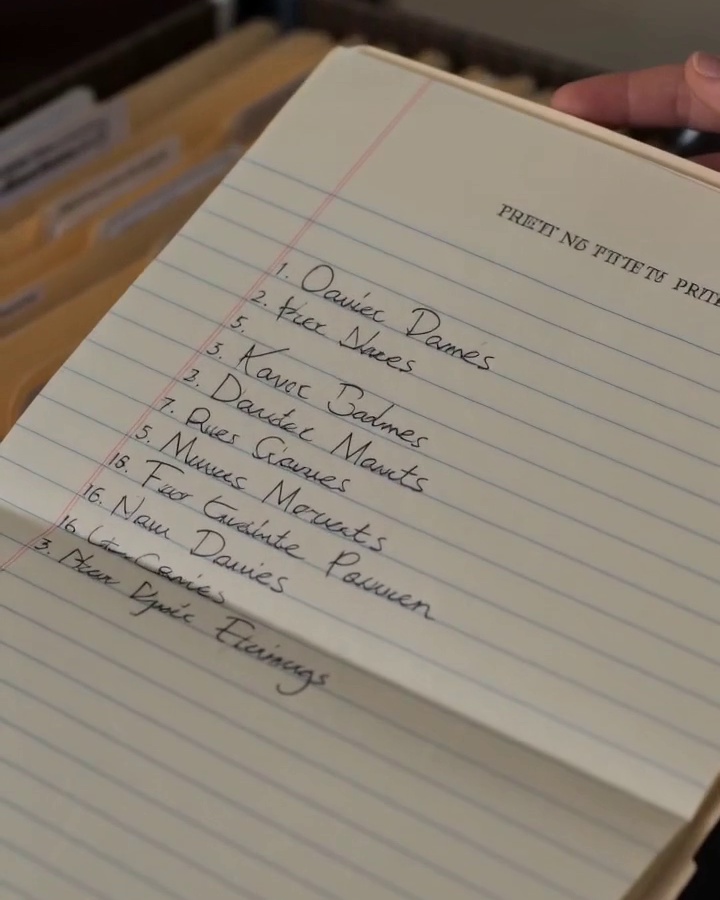
Then Arthur took the original handwritten list.
The page Emily had first handed him.
Names down one side.
Instructions beside them.
Hold correspondence.
Do not forward.
Store separately.
Then the final sheet.
Victoria’s signature.
For years, those pages had quietly controlled who Arthur believed cared about him.
Now they had no power except as a record of what happened.
Arthur placed them in the folder.
Then shut it.
Months later, Emily asked him whether he wished she had never opened the box.
Arthur stared at her as though the question surprised him.
“No.”
“Even though it hurt?”
“Especially because it hurt.”
Emily frowned.
Arthur explained.
“I spent years being angry at people for something they hadn’t actually done.”
“Samuel spent years thinking I had rejected him.”
“Rebecca thought I didn’t care about her.”
“Thomas thought I no longer wanted to be included.”
Then:
“A painful truth gives you something a comfortable lie never can.”
“A chance to make a different choice.”
Emily remembered the moment clearly.
The dusty storage room.
The old box beneath the shelf.
Victoria appearing in the doorway.
“Put those back.”
Arthur walking in.
The handwritten list.
The names.
The instructions.
Then the final sheet.
Arthur staring at the bottom.
Slowly looking toward Victoria.
“That’s your signature.”
That signature had not proved a theft.
It had not revealed a hidden fortune.
It did not uncover some stranger’s secret identity.
It proved something far more personal.
Family members Arthur believed had abandoned him had actually continued trying to reach him.
Their letters had been held.
Their calls had been filtered.
Their invitations had been stored away.
And one person had been deciding what both sides were allowed to believe about the other.
Victoria began by thinking she was protecting her grieving brother.
Then anger influenced her choices.
Then fear of admitting those choices kept the lie alive.
Eventually protecting Arthur stopped being the reason.
Protecting herself became the reason.
That difference mattered.
So did what happened afterward.
Victoria admitted it.
Arthur stopped allowing anyone to manage his relationships for him.
Samuel stopped waiting for messages through someone else.
Rebecca returned.
Thomas returned.
Claire finally understood why parts of the family had disappeared during Emily’s childhood.
And Emily learned that old family paperwork was not always meaningless simply because nobody had looked at it for years.
Sometimes a handwritten list could explain a decade of silence.
Sometimes one signature could prove who had made the decision.
And sometimes opening the box everyone wanted left closed was the only reason a family finally had the chance to speak directly again.
THE END
“`