Chef Ethan Dismissed an Elderly Customer’s Advice — Then the Manager Saw His Name on the Original Recipe Hanging on the Wall
Chapter 10 — Two Names Beneath the Recipe
The renovation finished three months later.
Harbor House looked different.
New equipment.
Better lighting.
Larger prep stations.
But several things remained exactly where they had always been.
The old copper pot.
The original stove.
And the framed recipe.
Margaret changed one thing beside it.
A new plaque appeared.
HARBOR HOUSE WINTER SOUP
Created by Evelyn Hart and Arthur Mercer, 1979–1981.
Beneath that:
First served during the November 1979 ferry shutdown to stranded waterfront workers.
No exaggerated legend.
No claim that one genius invented everything in a single magical moment.
Just the truth.
Two cooks.
A storm.
A nearly empty pantry.
And a pot made for people who needed something warm.
Arthur attended the reopening.
Not as owner.
Not as celebrity chef.
Not as someone demanding recognition.
Margaret introduced him simply:
“One of the two people who created the recipe this restaurant became famous for.”
The room applauded.
Arthur looked uncomfortable.
Then Ethan brought him a bowl.
“Taste it.”
Arthur did.
Ethan waited nervously.
Arthur swallowed.
Then frowned.
“You’re missing something.”
Ethan stared at him.
“You’re kidding.”
Arthur held the serious expression for another second.
Then laughed.
“It’s right.”
Ethan shook his head.
“Don’t ever do that again.”
Arthur laughed harder.
Margaret joined them.
“Mom’s notebook is going into the local culinary archive.”
Arthur nodded.
They had photographed every page first.
Ethan kept a working copy in the kitchen.
Not hidden.
Not framed where nobody read it.
Used.
Every new cook learned why the lemon peel mattered.
Not merely how much to use.
They also learned the history of the last pot.
The restaurant resumed it every Friday and Saturday night.
No publicity campaign.
No social-media stunt.
Just soup until the pot ran empty.
Months later, Ethan was training a new cook.
The young man looked toward the recipe.
“Why char the lemon if we remove it anyway?”
Ethan smiled.
He remembered himself asking Arthur almost the opposite question.
Why add something that wasn’t on the modern recipe?
Now he understood.
“Taste before.”
The cook tasted the soup.
Then Ethan added the charred peel.
Seven minutes.
Removed it.
“Taste again.”
The young cook’s eyebrows rose.
“Oh.”
Ethan nodded.
“Exactly.”
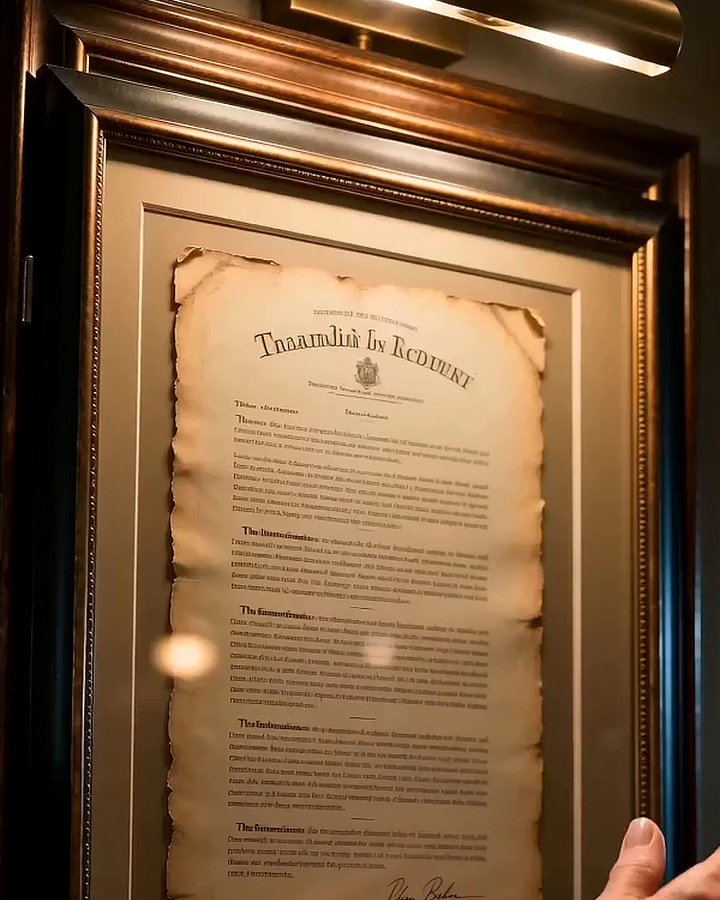
He looked toward the framed original recipe.
Two faded signatures remained at the bottom.
E. HART.
A. MERCER.
For decades, thousands of people had eaten beneath that frame.
Hundreds of cooks had worked beside it.
Everyone believed they knew its story.
Then one elderly customer walked into the kitchen.
He tasted one spoonful.
And calmly said:
“You’re missing one ingredient.”
Ethan almost dismissed him.
Why wouldn’t he?
The restaurant had served the soup for years.
The recipe sheet said he was doing everything correctly.
Experience told him the customer was wrong.
Then Margaret walked in.
She saw Arthur.
And froze.
Arthur pointed toward a signature Ethan had passed every day without noticing.
That signature led to the red notebook.
The notebook revealed the missing ingredient.
But it also revealed something larger.
It showed why Arthur left.
Why Evelyn regretted letting the recipe change.
Why two old friends never managed to find their way back to each other.
And why Harbor House’s most famous dish tasted different from the one that first made people line up in the snow for another bowl.
Ethan eventually understood that the charred lemon peel was not magical.
The restaurant could have survived without it.
It had survived without it for decades.
That was precisely the point.
Something can survive after losing part of itself.
A recipe.
A restaurant.
A friendship.
Even a family tradition.
But surviving is not the same thing as remembering.
Arthur had returned because renovations threatened to close the last place where Evelyn’s original notebook still existed.
Instead, he found her signature still hanging on the wall beside his.
He found a daughter who never knew why he left.
And a young chef willing to taste the difference for himself.
One Friday night, Arthur stood outside Harbor House just before closing.
He looked through the kitchen window.
Ethan was filling bowls from the last pot.
A dockworker took one.
Then a taxi driver.
Then a woman wearing hospital scrubs.
Margaret noticed Arthur outside and opened the door.
“You coming in?”
Arthur smiled.
“Is there any left?”
Margaret looked toward the pot.
“One bowl.”
Arthur stepped inside.
Ethan served it.
Arthur tasted the soup.
Charred lemon.
Seven minutes.
Exactly right.
This time he didn’t tell Ethan anything was missing.
Nothing was.
THE END
“`